
Air freight is sold by weight.
You pay for space.
Air freight into and out of Miami International, priced on whichever is greater: what your cargo weighs, or the room it takes up on the aircraft. Most shippers are quoted on the second one and find out afterwards. Work it out below before you book.
Quotes returned within 4 business hours, Monday–Friday.
Chargeable weight, worked out honestly.
An airline sells volume, not mass. So every shipment is measured two ways: what it actually weighs, and what its size says it should weigh, and you are billed on the larger of the two. Put your dimensions in and see which one you are about to pay for.
Volumetric weight uses the IATA divisor: 6,000 cm³ per kg, or 166 in³ per lb. A few carriers price on 5,000, and US domestic lanes often use 194. We will tell you which one applies to your booking rather than letting it turn up on the invoice.
Why it matters more than the rate. Two forwarders can quote the same dollars-per-kilo and bill very differently, because chargeable weight depends on how the cargo is built, not just what it is. A skid packed 12 inches taller than it needs to be can add hundreds of pounds of chargeable weight without adding an ounce of cargo.
Book by 12:00 PM. On the aircraft by five.
Air freight runs on a single day, not a weekly cycle. The general rule out of Miami is the same whatever the destination, and the reason the second cutoff sits hours before departure has nothing to do with the flight time.
Flights move day to day. The cutoffs do not.
Why we confirm the aircraft at booking, not in advanceEvery forwarder in Miami is quoting the same airlines out of the same airport. What separates a booking that flies tonight from one that sits is whether the cargo and its paperwork reached the desk before the cutoff, which is why those two times are the first thing on this page and the last thing we move.

An aircraft on the ground is not a shipment. It is a countdown.
We move aircraft-on-ground parts regularly for operators across Latin America. It is the work air freight exists for and the work that punishes a slow desk. Every hour that part sits is an aircraft not flying, a schedule unraveling, and a cost that dwarfs the freight.
What matters on AOG is not the rate. It is that somebody picks up, that the part is on the first available lift rather than the cheapest one, and that nobody waits until morning to make a decision. That is a way of working, not a service tier.
If you operate aircraft in the region and want this set up before you need it: routing, paperwork and who to call at 2:00 AM. That is a twenty-minute conversation worth having on a good day rather than a bad one.
- First available lift, not the cheapest routing
- Both directions: parts out of Miami, and rotables back for overhaul
- Dangerous goods: batteries, chemicals, pressurized units, with the paperwork right
- Charter when scheduled capacity will not take it
- Customs handled at both ends of the move

We are not tied to one airline.
A forwarder with one carrier relationship sells you that carrier’s schedule and that carrier’s bad days. We tender regularly to all of these, and book whoever has the right lift on the day your cargo is ready.
Booking across seven carriers means a canceled flight is a re-book, not a lost week. One relationship means one schedule.
When dimensions, weight or timing rule out every scheduled flight, a charter or part-charter is arranged. Uncommon, and occasionally the only answer.
Ocean to a transshipment point, then air onward. Slower than pure air, far cheaper, and worth pricing when the deadline is weeks rather than days.
Four miles from the ramp, with our own bond.
Our warehouse sits about four miles from Miami International. That is not a marketing distance. It is why cargo tendered here makes the same night’s flight instead of tomorrow’s, and why a recovery off an inbound aircraft can be devanned, sorted and back on a truck the same afternoon.
Miami is the busiest US gateway for freight to Latin America, which means capacity out of MIA is deep and competitive on almost every lane. The advantage is not that we can get you on a plane. It is that we can get you on tonight’s plane.
Not every air shipment fits a pallet.
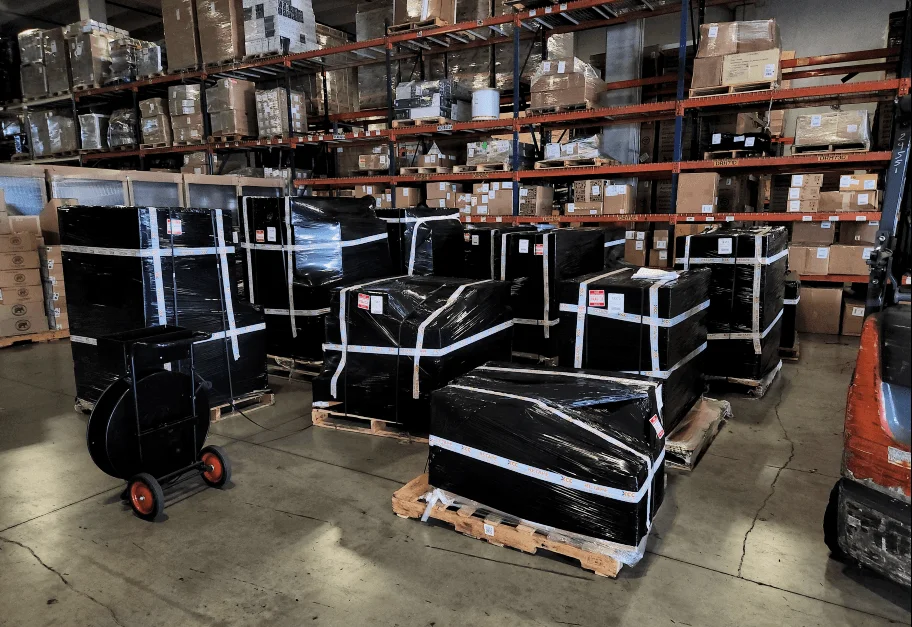
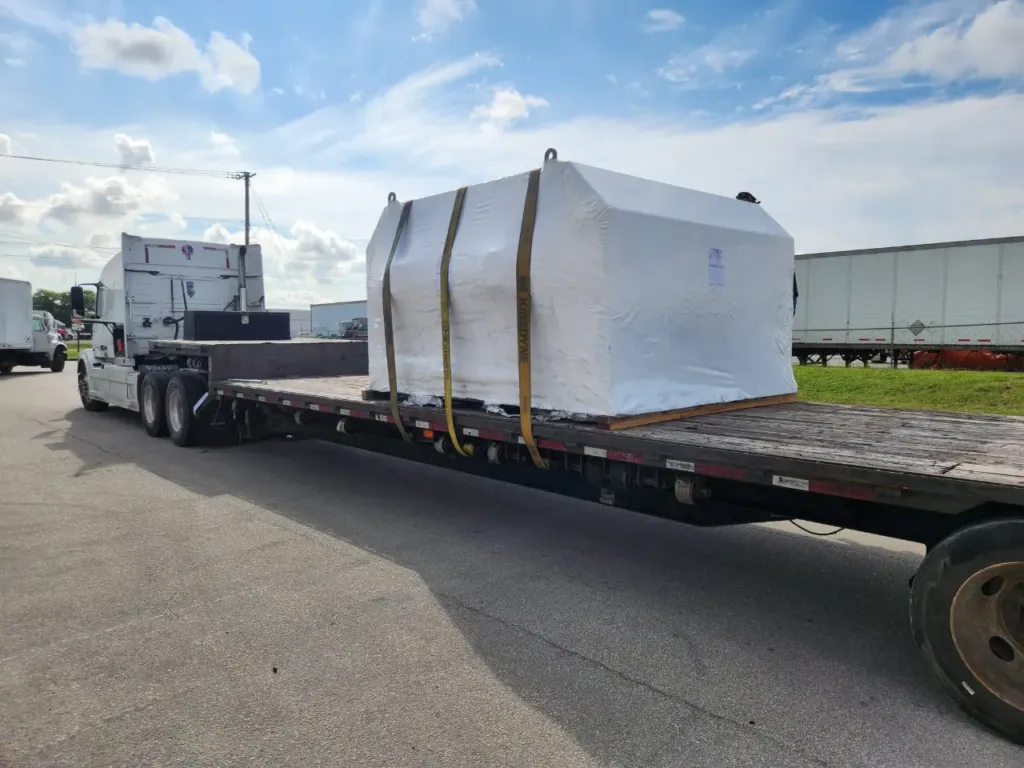
Out-of-gauge, crated on our floorAir cargo recovered from MIA that has to move onward by truck is handled at our bonded cross-dock: 18 doors, two ramps, and customs bond in the same building.

What our IAC certificate actually means for your cutoff.
Every piece of cargo flying out of the United States has to be screened. Where that happens, and who is allowed to hand it to the airline, is what separates a booking that flies tonight from one that sits.
We hold TSA certification as an Indirect Air Carrier, which is what allows us to tender cargo into the air system on our own authority rather than through a third party.
We do not screen in our building. Cargo is screened after we tender it, which is exactly why the dock cutoff sits hours before the flight, not minutes.
Cargo from an established shipper moves through screening more predictably. If you ship regularly and are not set up yet, that is a conversation worth having once rather than every booking.
Accepted by air. We need the completed DGD and the MSDS before the cargo arrives, not once it is on the floor with a flight to make. See dangerous goods consulting.
Belly, main deck, or it does not fly.
Most air cargo travels in the lower hold of a passenger aircraft, which sets a hard ceiling on height, roughly the size of a standard build-up pallet. Go taller than that and the shipment needs main-deck freighter capacity, which is a different booking at a different rate.
The decision is worth making before you crate, not after. A machine built four inches shorter can be the difference between belly capacity tonight and waiting for a freighter. Send us dimensions at the quote stage and we will tell you which one you are looking at.
- Aircraft parts and AOG spares: the cargo air freight exists for
- Pharmaceuticals: healthcare and life-science shipments
- Telecommunications and network hardware
- Industrial machinery, including out-of-gauge on main deck
- Chemicals, including classified dangerous goods
- Broadcast, touring and production equipment
Container and equipment dimensions for the ocean side are in the equipment guide.
Typical wide-body figures including the pallet base; the exact ceiling varies by aircraft and by carrier. We confirm it against the actual aircraft when we quote.

Both directions, business cargo only.
Worth saying plainly rather than letting you find out at the booking stage.
Out of Miami to the world, and inbound into MIA. Import recovery, customs and onward trucking are handled in the same building as the export desk.
We are a commercial freight forwarder. We do not handle personal effects, household goods or individual parcels. If that is what you need, a courier will serve you better and cheaper.
Perishable and temperature-controlled cargo flies only when it goes from your supplier straight to the airport. It can’t come through our warehouse, which has no cold storage. By sea, a refrigerated container loads at your supplier and goes straight to the port.
Machinery, out-of-gauge pieces, aircraft parts, pharmaceuticals and classified dangerous goods with the right paperwork in front of them.
Air freight from Miami.
How is air freight priced?
On chargeable weight: whichever is greater, the actual weight of your cargo or its volumetric weight. Volumetric weight is length × width × height in centimeters divided by 6,000, or in inches divided by 166. A light, bulky shipment is billed on its size; a small, dense one is billed on its mass. The calculator above works it out on your own dimensions.
What is volumetric weight, and why is mine higher than the actual weight?
Because an aircraft runs out of room before it runs out of lift. Airlines price the space a shipment occupies, so anything lighter than roughly 167 kg per cubic meter gets billed on volume instead of mass. It is not a surcharge. It is how the industry has priced air cargo for decades. The practical consequence: how your cargo is built changes the bill. A skid packed taller than it needs to be costs real money.
How fast is air freight out of Miami?
For most Latin American destinations it is overnight or next day once the cargo makes the day’s cutoff: book by 12:00 PM, cargo to the airline by five. Our Miami to Brazil lane runs daily and direct, on the ground in São Paulo the next morning. Guatemala flies every weekday on UPS and DHL and lands in Guatemala City the next day. Honduras has three airlines flying four times a week each, landing the next day. Nicaragua flies daily on Amerijet and UPS freighters and lands in Managua the same day. Costa Rica has DHL and UPS flying four times a week each, landing the next day. Panama flies daily on DHL and lands in Panama City the next day. Peru flies four times a week on DHL and lands in Lima the next day. Chile flies Thursday, Friday and Saturday on Atlas Air and LATAM and lands in Santiago the next day. Saturday’s flight closes Friday. The variable is rarely the flight; it is whether the cargo and its paperwork reach us before the cutoff.
Which destinations do you fly to?
Effectively all of them, weekly or better. But we deliberately do not publish a route map, because air freight does not work like a route map. Capacity is what is actually available on the day, on the aircraft that is actually flying, and it changes. A forwarder advertising fixed departures to sixty cities is showing you a marketing document, not a schedule. Tell us the destination and the date and we will tell you what genuinely lifts, on which carrier, for what.
Do you handle AOG?
Yes, regularly, for operators across Latin America. Aircraft parts move in both directions: spares out of Miami and rotables back for overhaul, including dangerous goods such as batteries and pressurized units where the paperwork is right. On AOG we book the first available lift rather than the cheapest routing, and charter when nothing scheduled will take it. If you operate aircraft in the region, it is worth setting this up before you need it rather than during.
Which airlines do you use?
We tender regularly to UPS, DHL, Amerijet, LATAM, American Airlines, Atlas Air and Avianca Cargo, among others. We are deliberately not tied to one carrier. A forwarder with a single relationship sells you that carrier’s schedule and that carrier’s bad days. We book whoever has the right lift on the day your cargo is ready.
Do you handle inbound air freight into Miami?
Yes, import as well as export. Cargo recovered from MIA is devanned, cleared and moved onward from our bonded cross-dock in the same building as the export desk, which is why a recovery in the morning can be on a truck the same afternoon.
Do you ship personal effects or household goods?
No. We are a commercial freight forwarder and handle business cargo only. For personal shipments a courier or a moving company will serve you better and cost you less.
Can you arrange a charter, or sea-air?
Both. Charter or part-charter when dimensions, weight or timing mean nothing scheduled will take the cargo. Sea-air, ocean to a transshipment point then air onward, is slower than pure air and considerably cheaper, and it is worth pricing whenever the deadline is measured in weeks rather than days.
Why is the cargo cutoff hours before the flight?
Because screening happens after we tender the cargo to the airline, not in our building. We hold TSA Indirect Air Carrier certification, which lets us hand cargo into the air system on our own authority, but the airline still has to screen it, and that takes time we do not control. The cutoff is built around that, not around the departure time.
Can you fly oversize or out-of-gauge cargo?
Yes. We book both belly capacity on passenger aircraft and main-deck freighter capacity, so oversize goes on whichever suits it. Height is usually the constraint. A wide-body belly hold takes roughly 63 in / 160 cm including the pallet base; a freighter main deck takes up to about 118 in / 300 cm. The exact ceiling varies by aircraft and carrier, so it is worth checking before you crate rather than after. Send dimensions with the quote request and we will confirm which you are looking at against the actual aircraft.
Can you handle dangerous goods by air?
Yes. We need the completed Dangerous Goods Declaration and the MSDS before the cargo reaches our dock. A shipment that arrives without them misses the flight, because the paperwork cannot be produced retroactively at the airline counter.
Do I need to be a known shipper?
Cargo from an established shipper moves through screening more predictably. If you ship by air regularly and are not set up, it is worth sorting once rather than negotiating it on every booking. Ask us and we will walk you through what is involved.
Is there anything you will not fly?
Cargo that has to stay cold can’t come through our warehouse, because it has no cold storage. It is better to say so now than to take the booking and let you down. Perishable and temperature-controlled cargo can still fly when it goes from your supplier straight to the airport, and by sea a refrigerated container loads at your supplier and goes straight to the port.
What do you need to quote air freight?
Dimensions and weight per piece, the piece count, the destination airport or door address, the commodity and its value for insurance, any dangerous goods classification, and when it needs to land. Dimensions matter more here than on ocean freight. Without them we cannot calculate chargeable weight, and any number we give you would be a guess. A rate comes back within 4 business hours.
What is the airline liable for if my cargo is lost?
Under the Montreal Convention the air carrier owes 26 Special Drawing Rights per kilogram of the cargo lost or damaged, which is a weight figure and has nothing to do with what your goods are worth. On most commercial shipments that is a fraction of the invoice. See cargo insurance for the arithmetic on your own cargo.
Send the dimensions. We will send the real number.
Not a rate per kilo that changes once someone measures the skid. The chargeable weight, the flight, and what it costs, before you commit the cargo.
Miami, FL 33166
(Medley)
8:30 AM – 5:00 PM ET