

Project cargo and heavy machinery from MiamiSome freight does not fit in a box.
Helicopters. Boats and trailers. Trucks and heavy machinery. Generator sets and crated production lines. Project cargo out of Miami, by ocean and by road. When the piece is longer, wider, taller or heavier than the equipment it is supposed to travel in, the job stops being a booking and becomes a plan, and the plan is what we do.
Send length, width, height and weight and we will come back inside 4 business hours, Monday–Friday.
Will it go in a container?
Put the piece in and find out which equipment it belongs on before anybody quotes it. The dimensions below are the ones we publish on our own container equipment guide: interior clearances and door openings, not the marketing numbers.
Enter the piece at its shipping dimensions, including the cradle, the skid or the crate, because that is what has to fit. We assume it travels upright and can be turned on the floor, not stood on end.
- Where the center of gravity sits
- Whether it has lift points, and where
- Whether it can be tilted or laid down
- Whether it is self-propelled or wheeled
- What it is worth, for the insurance
Interior clearances vary unit to unit and the carrier’s equipment is what governs. Treat this as the first answer, not the booking. We confirm against the actual box before anything is committed.
Six ways to ship out of gauge cargo, cheapest first.
Every step down this list costs more and takes longer to arrange. The whole skill is knowing which step your piece actually needs, and not buying the one below it.
Standard container
If it goes through the doors and stands up inside, it ships like any other cargo. Most “project” pieces we get asked about turn out to fit, and the honest answer saves the customer a five-figure surcharge.
Door 92″ × 89″
High cube
Thirteen more inches of interior height and twelve more at the door. It is the difference between a machine traveling on its own base and a machine traveling on its side.
Door 92″ × 101″
Open top
Same footprint, no roof. The piece is craned in from above instead of pushed through the doors, which solves height at the door and nothing else. Tarped and bowed for the voyage.
Roof load, tarp and bows
Flat rack
A deck with end walls and nothing else. This is where over-width and over-height cargo lives, and where lashing stops being a formality. The piece is secured to the deck and the securing is inspected.
Usable height 76″
Breakbulk
No container at all. The piece is lifted aboard by the ship’s gear or shore crane and stowed on deck or in the hold. Fewer sailings, longer lead times, and the booking has to be worked rather than clicked.
Lift plan required
Roll on, roll off (RO-RO)
Anything with wheels or that can be put on wheels drives or is towed aboard. RO-RO is usually the right answer for vehicles, trailers, heavy equipment and wheeled plant, and often cheaper than forcing the same piece into a flat rack.
Ramp clearance governs
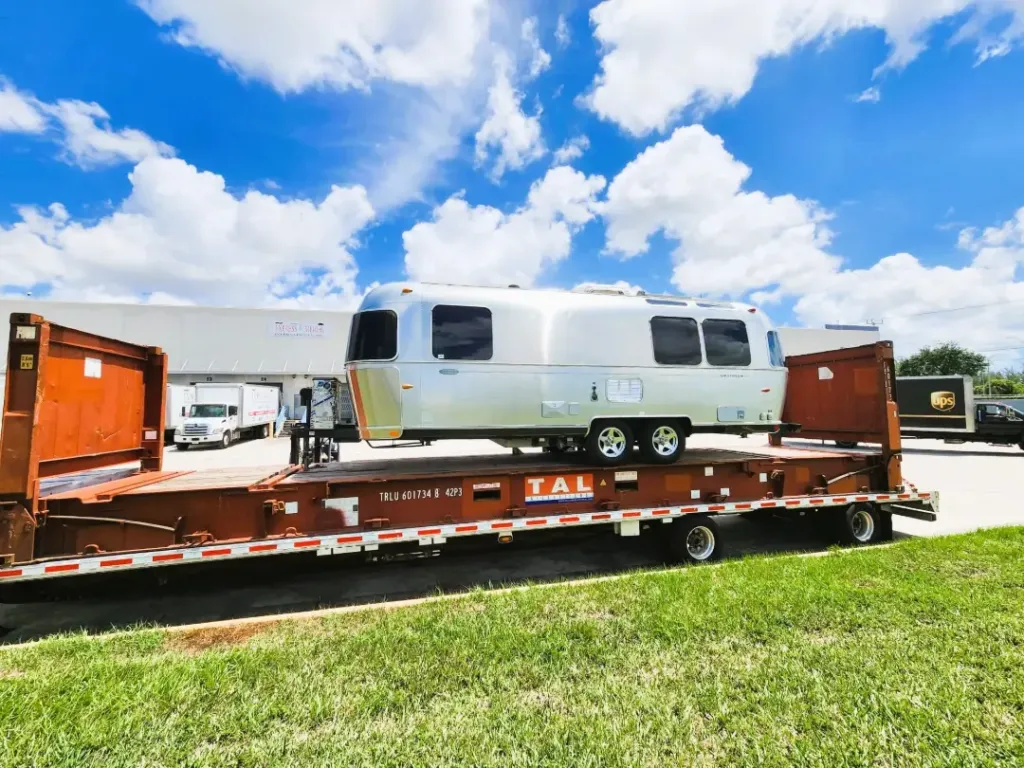
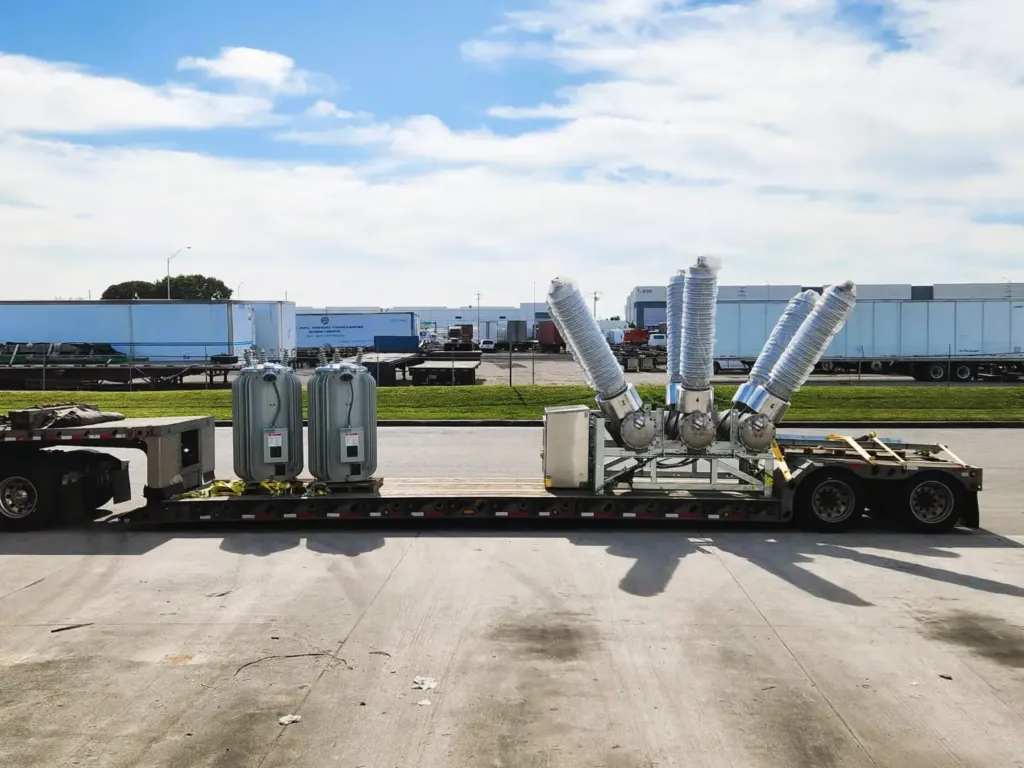
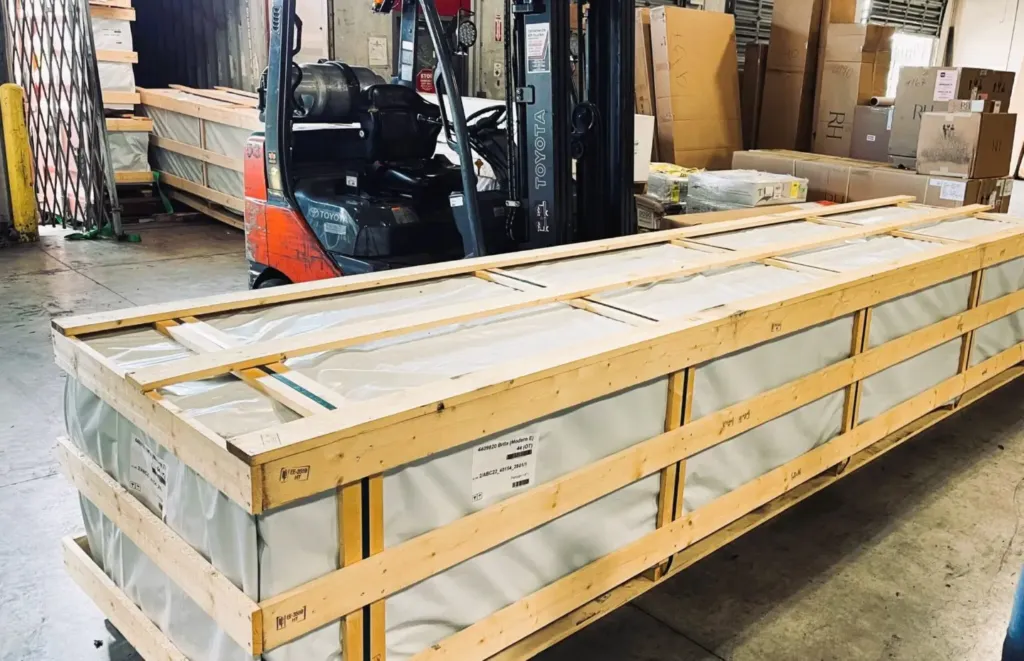
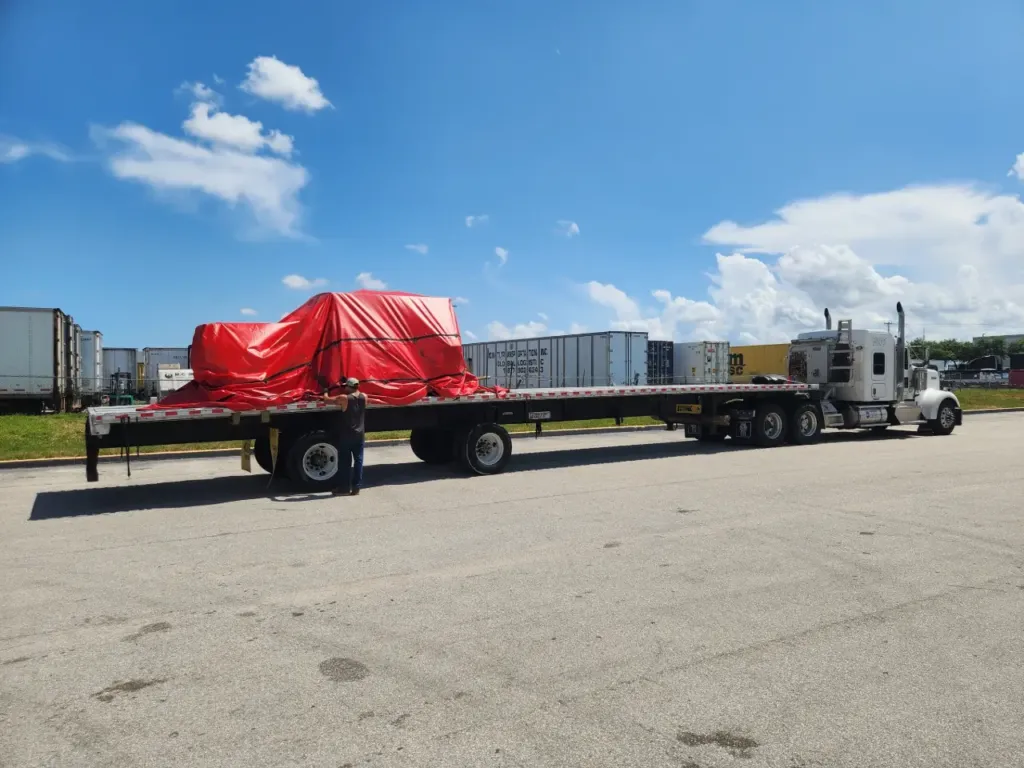
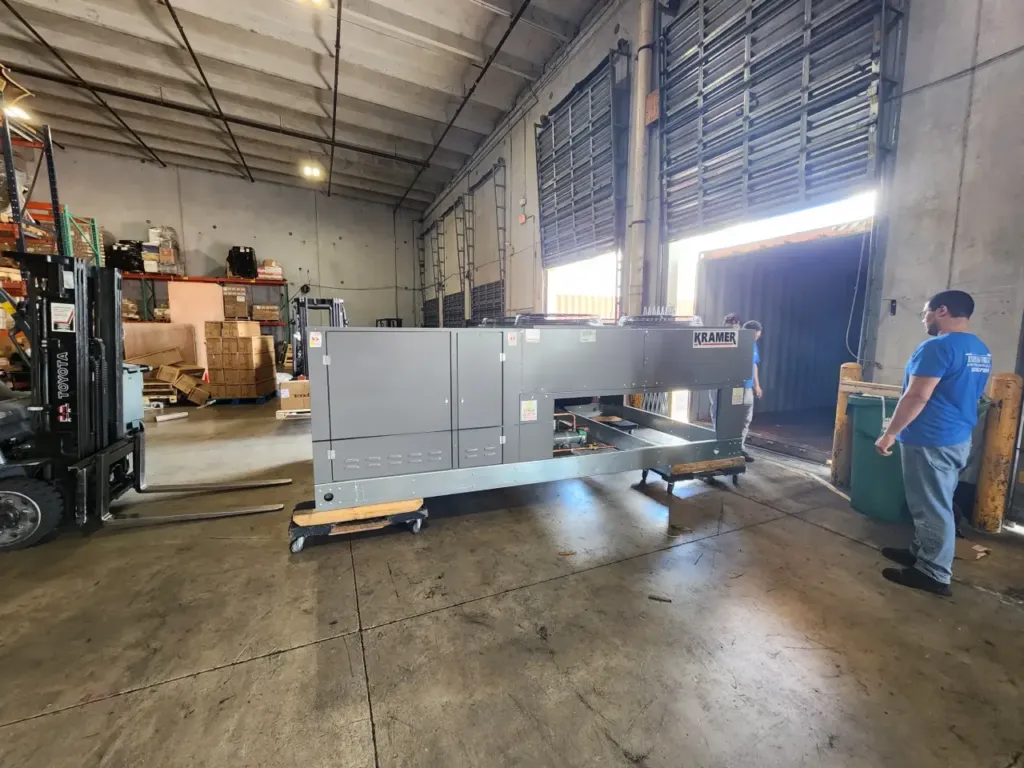
Heavy machinery, boats and aircraft that crossed our Miami dock.
Every photograph on this page is a job out of our own building in Medley. None of it is licensed from a library, which is a low bar that most of this industry still fails to clear.

Seventy-two hours, or the vehicle does not leave.
Used self-propelled vehicles are the single most common way a project export misses its sailing, and it is never the shipping that causes it.
For export by vessel or aircraft, the documentation and the vehicle itself must be presented to CBP at least 72 hours before export. At a land border, the paperwork goes in 72 hours ahead and the vehicle is presented at the time of export.
“Used self-propelled vehicle” is broader than cars. It reaches trucks, buses, motorcycles, and agricultural and construction equipment that runs on land.
19 CFR 192.2(b) and (c)The original Certificate of Title or a certified copy, plus two complete copies, or the equivalent ownership document where the vehicle was never US-titled. A newly manufactured vehicle that has never been titled is documented differently again.
Miss the window and you are not paying a fine, you are rolling to the next sailing, which on a weekly lane means a week, plus storage, plus whatever the consignee had planned at the other end.
We ask for the title the day the booking opens, for exactly this reason. Get it to us early and the 72 hours takes care of itself.
Bring it up before you book, not afterBoats and aircraft sit outside that specific definition, but they carry requirements of their own: cradles and shrink wrap, fuel drained to residual, batteries disconnected, and on aircraft the residual fuel question that decides whether it is a dangerous goods shipment. We work those the same way: early, in writing, before the crane is booked.
What a project cargo move actually involves.
Survey the piece
Dimensions at shipping condition, weight, center of gravity, lift points, and whether it can be turned, tilted or laid down. This is the conversation that decides everything after it.
Pick the equipment
The ladder above, applied honestly. We will tell you when a standard box works, because the surcharge on the step below it is real money and it is your money.
Build the packaging
Crates framed to the piece, cradles, skids and bracing, and ISPM 15 heat-treated timber with the mark, because uncertified wood is refused at the other end.
Get it to the dock
Flatbed, step deck or lowboy on the inland leg, permits where the load needs them. Into our building through 18 doors, a double-wide ramp, or at ground level when it will not come off a dock at all.
Load and secure
Loaded, blocked, braced and lashed to the deck or the floor of the box, worked by our own supervised crew rather than whoever the yard sent.
Paper it properly
Bill of lading, export declaration, certificate of origin, the 72-hour filing on vehicles, dangerous goods declaration where residual fuel or batteries put it there. Customs is managed in the same building.
Deliver at the other end
On the lanes we run we work with agents at destination who handle the import entry, so the piece does not arrive somewhere with nobody appointed to clear it.
Distribution: the other half of the job, which nobody photographs.
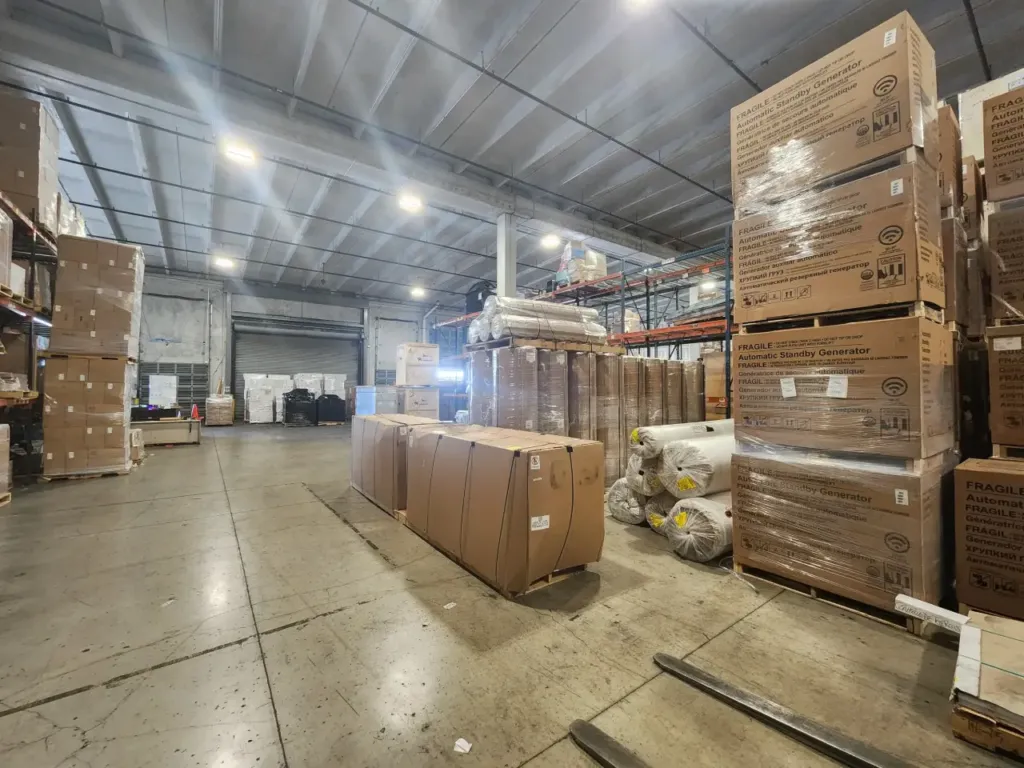
A project is rarely one piece. It is nine suppliers shipping on their own schedules into one delivery window, and the hard part is not the crane. It is the six weeks where half of it has arrived and the rest has not.
That is what the building is for. We receive each supplier’s freight as it lands, check it against your packing lists, hold it where we can see it, and release it in the order the site actually needs it. When the last piece arrives, the shipment goes out complete instead of in nine partial deliveries that somebody at the other end has to reconcile.
Storage, consolidation and the distribution legs are covered in more detail on warehousing & distribution, cross-docking and trucking. For project work they are all the same file and the same phone number.
What we will not claim: there is no tracking portal. We do not have one, and a page that promises live visibility it cannot deliver is worse than no page. What you get instead is a person who knows where your freight is, on a number that gets answered.
Planning a project move.
What counts as project cargo?
In practice, anything that cannot simply be booked. Heavy equipment, plant and machinery are the usual candidates. That usually means out of gauge: too long, too wide, too tall or too heavy for a standard container, but it also covers freight that is in gauge and still needs managing: a shipment split across many suppliers, a piece that needs engineered crating, cargo that has to arrive in a specific sequence, or equipment that requires a crane at both ends. If you are not sure which side of the line yours falls on, send the dimensions and we will tell you.
Do you really ship helicopters and boats?
Yes. Helicopters and small aircraft, boats, vehicles, trucks and trailers, and heavy industrial machinery have all moved through this building. The photographs on this page are ours. What we will not do is claim a tonnage figure we cannot stand behind. Tell us the actual weight and lift points and we will tell you straight whether it is a job for us, for a heavy lift specialist, or for both of us together.
What is the difference between out of gauge and breakbulk?
Out of gauge means the cargo still travels on container equipment, usually a flat rack or an open top, but sticks out past the frame. The line charges for the container slots your overhang blocks, and the piece has to be approved for carriage. Breakbulk means no container at all: the piece is lifted directly aboard and stowed as cargo. Breakbulk is normally the more expensive and less frequent option, which is why getting the piece onto a flat rack, if it will go, is usually worth the effort.
Can you crate it for me?
Yes, and in a lot of cases you should let us. Crates get built to the piece, framed and skidded for the way it will actually be handled, using ISPM 15 heat-treated timber with the mark on it. Uncertified wood packaging gets refused across most of Latin America and the Caribbean, and by then the cargo is already at the border.
How far ahead do I need to start?
Earlier than a standard container booking, and the reason is rarely the ocean leg. Special equipment has to be sourced and positioned, out of gauge pieces need carrier approval, a road move may need permits and a route that avoids low bridges, and a used vehicle needs its 72-hour CBP presentation. None of those are long on their own; they just do not run in parallel with a booking made on Thursday for a Monday sailing. Call us at the quoting stage, not the shipping stage.
Who secures the cargo, and who is responsible if the lashing fails?
When the piece is loaded in our building, our crew blocks, braces and lashes it, and we sign the container packing certificate that goes with it. Where a piece is loaded at your plant or a third-party yard, the securing is theirs and we will tell you what it has to meet. Securing on a flat rack is inspected before the unit is accepted, and a rejected lashing at the terminal costs a sailing.
Do you handle the customs side too?
Yes. Customs clearance is managed in-house. The entry itself is filed by the licensed customs broker we work with, from the same file. On vehicles that includes the 72-hour filing to CBP before export. At destination we work with agents on each lane who handle the import entry.
What about dangerous goods on a project shipment?
It comes up more than people expect. Residual fuel in an engine, a battery bank in a generator set, aerosols and paints in a commissioning kit. Any of those can put a piece under the dangerous goods rules. Our staff are DG trained and certified and the declaration is built here. See dangerous goods consulting, and if you just need to know whether two classes can ride together, the segregation checker is free and takes a minute.
The rest of the job, in the same building.
Send us length, width, height and weight.
That is all we need to start. A photograph helps. A drawing with lift points helps more. Everything after that is our problem.
Miami, FL 33166
(Medley)
8:30 AM – 5:00 PM ET
Read this before you rely on it
The fit check on this page is a planning aid, not a booking and not an engineering opinion. Container interior clearances vary between builders and between carriers, and the equipment actually supplied is what governs your shipment. We confirm against the real unit before anything is committed. Weight limits shown assume a standard chassis within US DOT legal weight, with no overweight or tri-axle permit. Lifting, stowage and securing decisions on out of gauge and breakbulk cargo are made with the carrier and, where required, a marine surveyor. Regulatory citations were checked on September 18, 2026; confirm anything that matters against the current regulation before acting on it.
Sources
- 19 CFR 192.2(b) and (c): export of used self-propelled vehicles: documentation and the vehicle presented to CBP at least 72 hours before export by vessel or aircraft.
- 19 CFR 192.1: definition of a self-propelled vehicle for those requirements.
- EFI container equipment guide: interior clearances, door openings and maximum legal cargo weights used by the fit check on this page.
- IMO/ILO/UNECE Code of Practice for Packing of Cargo Transport Units, 2014: the reference standard for packing, blocking, bracing and securing in a container or on a flat rack.
- ISPM 15 (IPPC): treatment and marking of wood packaging material used in international trade.
- 49 CFR 176.27(c): container packing certificate for a unit offered to a vessel with hazardous materials aboard.