
Cargo insurance for Miami shipmentsThe carrier owes you $500 a package. Not what it was worth.
Every mode of transport has a legal ceiling on what the carrier has to pay when your cargo is lost or destroyed, and not one of those ceilings has anything to do with the value of your goods. Cargo insurance is what covers the difference. We arrange it, an underwriter carries it, and this page shows you how big the difference actually is before you decide. We arrange cover on ocean, air and road shipments moving through Miami.
We respond within 4 business hours, Monday–Friday, 8:30 AM – 5:00 PM ET.
What is the carrier actually on the hook for?
Put in what you are shipping. The number on the right is what you are carrying yourself, whether or not you meant to.
This is an illustration of statutory ceilings, not a quote and not a coverage opinion. What your carrier actually owes depends on the contract of carriage it issued.
Where each carrier liability limit comes from.
None of these are obscure. They are in every bill of lading you have ever signed, in language designed not to be read on a Tuesday afternoon.
The US Carriage of Goods by Sea Act caps the carrier at $500 per package unless a higher value was declared and the higher freight paid. The figure has not moved since 1936.
What counts as a “package” is decided by how the bill of lading describes the cargo, which is exactly why a bill that says “1 container” instead of listing the skids inside it is a bad idea.
Two more traps: written notice of loss is due at delivery, or within three days if the damage was not apparent, and suit has to be brought within one year of delivery.
46 U.S.C. 30701 note · sections 3(6) and 4(5)The Montreal Convention limits the air carrier to 26 Special Drawing Rights per kilogram of the cargo lost or damaged. That limit rose from 22 SDR on December 28, 2024, under the Convention’s five-year review.
SDR is an IMF unit, so the dollar figure floats. At the IMF rate published for September 17, 2026, one SDR was US$1.365750, which puts the limit at roughly $35.51 per kilogram.
It is charged on weight, not value. A pallet of circuit boards and a pallet of floor tile are worth the same to the airline.
Montreal Convention 1999, article 22(3) · ICAO revised limitsThe Carmack Amendment makes an interstate motor carrier liable for the actual loss or injury to the property. That sounds generous, and it is, as a default.
Carriers are allowed to limit that liability to a released value if they give the shipper a real choice of rates and get it in writing. Most do, and most shippers sign it without reading the rate sheet it points to.
Read what your carrier’s tariff says per pound before you assume full value. The number is often smaller than the freight bill.
49 U.S.C. 14706
The bill that arrives when your cargo did nothing wrong.
A fire in someone else’s container can make your cargo pay for the salvage.
General average is maritime law older than insurance itself. When a ship is in peril and the master sacrifices cargo or spends extraordinary money to save the voyage, everyone with property aboard shares the cost in proportion to value. Not the party at fault. Everyone.
When general average is declared, the shipowner takes a lien on every container aboard. Your cargo does not move until security is posted, either a cash deposit or an insurer’s guarantee. If your goods are insured, the underwriter posts it and you carry on. If they are not, you find the cash yourself, usually as a percentage of the value of your own shipment, and you wait.
Neither of those was a small ship or an unlucky year. General average gets declared after fires, groundings, engine failures and collisions, and container ship fires are not rare. An insured shipper experiences it as paperwork. An uninsured one experiences it as a wire transfer.
What a marine cargo policy covers, and what it never will.
Marine cargo cover is written on the Institute Cargo Clauses, in three flavors. Most commercial freight moves on (A).
✓ Broadly, what is covered
- Clauses (A). All risks of loss or damage to the cargo, except what the policy specifically excludes. The widest of the three, and the usual choice.
- Clauses (B). A named list: fire and explosion, stranding, sinking, capsizing, collision, derailment, earthquake, lightning, water entering the hold or container, general average sacrifice, jettison and washing overboard.
- Clauses (C). The same list minus earthquake, lightning, water ingress and loss overboard during loading. The narrowest.
- General average and salvage. Covered under all three, which is the point of the section above.
- Warehouse to warehouse. Transit cover runs from the origin warehouse to the named destination, subject to the time limits in the transit clause.
✕ What is excluded, in all three
- Insufficient or unsuitable packing. The most common denial there is, and the one entirely within your control.
- Inherent vice. Cargo that damages itself: rust, fermentation, moisture from the goods themselves.
- Delay. Even where the delay was caused by an insured peril. Lost market is not a cargo claim.
- Ordinary leakage, wear and loss in weight. Normal shrinkage is not damage.
- Wilful misconduct of the assured, and loss caused by the carrier’s insolvency in defined circumstances.
- War and strikes. Excluded as standard, and bought back separately through the war and strikes clauses. Ask for it on lanes where it matters.
Coverage terms vary by underwriter and by policy. The above describes the standard Institute Cargo Clauses in general terms. What your certificate says is what governs your shipment, and we will send you the actual wording rather than a summary of it.
Five ways a good claim dies.
-
Nobody wrote anything on the delivery receipt
The driver waits, the warehouse signs clean, and the damage gets found at 4:00 PM. A clean receipt is evidence the cargo arrived in good order. Note the exception on the paperwork at the door, even if it is just “carton crushed, subject to inspection.”
-
The notice went in late
Ocean carriers get written notice at delivery, or within three days where the damage was not apparent, and suit within a year. Road claims have their own windows. The deadlines are shorter than anyone expects and they are not negotiable after the fact.
-
The goods were repacked or moved before survey
Once damaged cargo has been unstacked, repacked or thrown out, nobody can establish what happened or what it cost. Leave it where it is, photograph it, and let the surveyor see it as it landed.
-
The packing was not up to the journey
Insufficient packing is an exclusion in every set of Institute Clauses. Ocean freight is a month of vibration, humidity and stacking, and packaging built for a domestic van will not survive it. This is the failure we see most.
-
The value was never properly declared
Under-declared value pays out under-declared. And where the policy is written on an agreed value, a certificate issued after the loss is not a certificate.
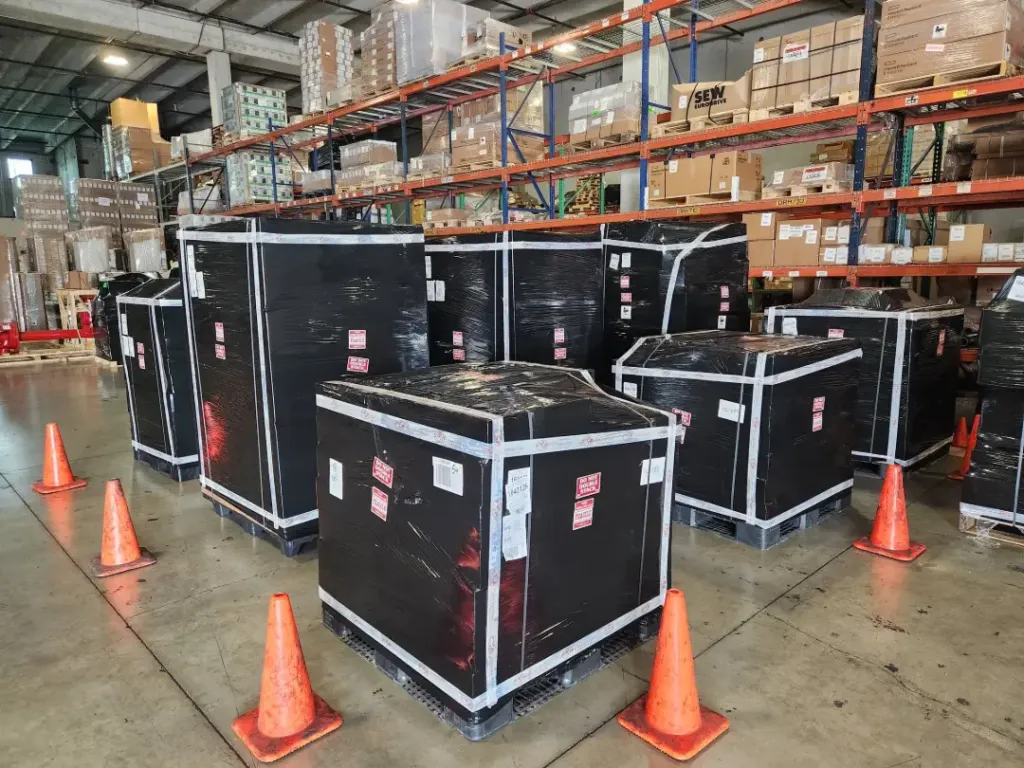
We arrange the cargo insurance. We do not carry the risk.
There is a version of this page that implies the forwarder is the insurer. It reads better and it is not true, so here is the arrangement instead.
Tell you what the carrier’s liability actually is on your lane, arrange cover through a licensed provider at the value you declare, get you the certificate before the cargo moves, and stay in the file if there is a claim.
An underwriter. The policy is theirs, the certificate is issued against their cover, and the claim is decided on the policy wording, not on our opinion of it.
We are not an insurance company and we are not your insurance advisor. If the decision is finely balanced or the cargo is unusual, talk to a licensed broker or your own counsel, and we will say so.
One call. The coverage gets arranged alongside the booking, by the people who already know the commodity, the packing and the route, instead of after the fact by someone who has never seen the cargo.
Coverage and claims.
Isn’t my cargo already covered by the carrier?
No. What the carrier has is limited legal liability, which is a different thing from insurance in three ways. It caps out at a figure unrelated to your cargo’s value: $500 a package at sea, 26 SDR a kilo by air. It only pays if the carrier is found liable, and the carriage conventions give carriers defences for things like perils of the sea. And it never covers your share of a general average declaration. Cargo insurance responds to the loss itself, not to the question of whose fault it was.
What value should I insure for?
The market convention is the CIF value plus ten percent: the cost of the goods, plus insurance and freight, plus ten percent. The extra ten covers the costs a loss creates that the invoice does not show: prepaid freight you cannot get back, duty already paid, the expense of sourcing again. It is a convention, not a rule, and you can insure for more or less. Under-declare and the payout is calculated on what you declared.
Are Institute Cargo Clauses (A) really all risks?
All risks of physical loss or damage, subject to the exclusions, and the exclusions matter. Insufficient packing, inherent vice, delay and ordinary leakage are out under (A) exactly as they are under (B) and (C). War and strikes are excluded as standard and added back separately. “All risks” means the policy does not make you prove which named peril caused it; it does not mean everything is paid.
What is general average and why would I owe money for someone else’s fire?
Because maritime law says so, and has for centuries. If the master sacrifices cargo or incurs extraordinary expense to save the ship and the voyage, whether salvage, towage, firefighting or jettison, the cost is shared by everyone with property aboard, in proportion to value. After the Maersk Honam fire, cargo interests had to post security totaling about 54 percent of their cargo value before their containers were released. Insured shippers had the underwriter post it. Uninsured ones had to find it.
Does my cargo stay covered while it sits in your warehouse?
Only where the policy says so. Standard transit cover follows the goods from warehouse to warehouse but ends at the named destination or at defined time limits after discharge, and storage outside ordinary transit falls outside it. A warehouse’s own liability is a separate thing again, limited by the terms of the warehouse receipt and typically expressed per pound rather than per dollar of value. If your freight is going to sit, say so and we will get the storage period covered properly rather than assuming.
How fast do I need to report a loss?
Immediately, in writing, and before anything is moved. For ocean shipments, written notice is due at delivery, or within three days if the damage was not apparent, with suit within one year. Note the exception on the delivery receipt at the door. Photograph the cargo where it sits. Then call us, because the first hour is when a claim is either preserved or quietly lost.
Can you insure anything?
No. Underwriters exclude or load certain commodities, and used or second-hand goods, live animals, cash and bullion, and some high-theft categories are handled differently or declined. Dangerous goods, refrigerated cargo and project pieces are all insurable but they are underwritten on their own facts. Tell us what it is early and we will give you the honest answer before you have booked anything.
Do I need coverage if I am buying on CIF terms?
Under CIF and CIP the seller arranges insurance, but pay attention to what was bought. CIF only obliges the seller to take the minimum cover, Institute Cargo Clauses (C), unless you agreed otherwise, and (C) is narrow. Check the certificate rather than the Incoterm. Under FOB, EXW, FCA and the D terms the arrangement sits differently again. If you are not sure who is covering which leg, send us the terms of sale and we will map it.
Related, and worth five minutes.
Tell us what it is and what it is worth.
Commodity, value, packing and route, for anything moving through Miami. We will tell you what the carrier’s exposure actually is on that lane and arrange cover for the rest, before the booking and not after the loss.
Miami, FL 33166
(Medley)
8:30 AM – 5:00 PM ET
Read this before you rely on it
Express Freight International, Inc. is a freight forwarder and NVOCC, not an insurance company, an insurance agent or an insurance advisor. Cargo coverage referred to on this page is arranged with and carried by a licensed provider, and the policy wording and certificate issued for your shipment govern what is and is not covered. Nothing here is a quote, a binder, a coverage opinion or legal advice. The liability figures are the statutory and conventional ceilings that apply in general; the contract of carriage your carrier issued is what decides your case. SDR values float daily. The dollar equivalent shown for the air limit uses the IMF rate published for September 17, 2026, and will drift. Citations checked September 18, 2026.
Sources
- Carriage of Goods by Sea Act, 46 U.S.C. 30701 note, section 4(5): $500 per package or customary freight unit.
- Same act, section 3(6): written notice at delivery or within three days where loss is not apparent; suit within one year of delivery.
- Montreal Convention 1999, article 22(3), as revised by ICAO: 26 SDR per kilogram, effective December 28, 2024.
- International Monetary Fund SDR valuation, rate published for September 17, 2026: 1 SDR = US$1.365750.
- Carmack Amendment, 49 U.S.C. 14706: carrier liability for actual loss, and limitation by released value.
- Institute Cargo Clauses (A), (B) and (C), dated January 1, 2009: insured perils, exclusions and the transit clause.
- York-Antwerp Rules, Rule A: definition of a general average act, as published by the Comité Maritime International.
- Maersk Honam, 2018: salvage security of 42.5% and general average deposit of 11.5% of cargo value required before release, as widely reported in the trade press.