
Customs clearance in MiamiThe clock on your container started before it was loaded.
Most customs trouble is not decided at the port. It is decided twenty-four hours before the box is lifted onto the ship, by whether somebody filed. We manage US customs clearance end to end out of Miami. Documents, agencies, bond, exam, release, and we tell you which deadline is next instead of waiting for you to ask.
We respond within 4 business hours, Monday–Friday, 8:30 AM – 5:00 PM ET.
- Customs power of attorneySigned before the booking
- Customs bondContinuous or single entry
- Commercial invoiceValues and country of origin
- Packing listMarks, pieces, weights
- Bill of lading or airway billHowever it is moving

Customs clearance, managed in-house. A licensed broker files it.
Only a licensed customs broker can transact customs business for someone else. That is 19 CFR part 111, and it is not a detail we are going to bury three clicks down.
So here is the arrangement, plainly. We hold the file. We chase the documents, screen them before they go anywhere, handle the partner agencies, watch the bond, follow the exam, and pick up the phone when you call. The entry itself is filed by the licensed broker we work with, on your power of attorney, from inside the same file we are working from.
What you do not get is the usual arrangement, where the forwarder emails your paperwork to a broker neither of you has met and everybody waits to see what happens. One file. One number to call. If something is wrong, the person who tells you is the person who can fix it.
- Collect and check documents before anything is filed
- File ISF inside the 24-hour window
- Coordinate the entry with the licensed broker
- Handle FDA, USDA, EPA and other agency data
- Track the bond and flag it when it is undersized
- Follow exams and push for the release
- Receive and deconsolidate under bond at our CFS
- Deliver on our own trucks across South Florida
- You are the importer of record
- Reasonable care on classification and value
- Signing the customs power of attorney
- The bond in your name
- Recordkeeping, five years
- Duties, taxes and fees
We will tell you when something is your call rather than ours. That is usually cheaper for you than finding out later.
Seven checkpoints. The two most expensive happen before your box is on the ship.
This is the sequence for an ocean import into the United States. Put your dates in and the deadlines below move with them.
In the freight glossary: ISF · Customs bond · In-bond
Working days skip Saturdays, Sundays and US federal holidays.
- −24 hoursbefore lading
The ISF goes in
Ten data elements, filed before the container is lifted onto the ship at the origin port. Not before it arrives here. Before it leaves there. Late, missing or wrong is $5,000 in liquidated damages against the ISF bond, and CBP can hold the box on arrival while you sort it out.
What it takes from you: seller, buyer, importer of record number, consignee number, manufacturer or supplier, ship-to party, country of origin, the six-digit HTS, the container stuffing location and the consolidator. Most of that lives with your supplier, which is why we ask for it the week the booking is made.
19 CFR 149.2Ocean imports only - Before arrivalideally at booking
The paperwork that has to already exist
A signed customs power of attorney, an active customs bond in your name, a commercial invoice that actually shows values and country of origin, a packing list, and the bill of lading. If you are claiming CAFTA-DR or USMCA duty-free treatment, the certification comes with it, not after the fact.
A customs power of attorney is not filed with CBP. It sits in the broker’s file and gets produced on demand. That is exactly why we want it signed before there is a shipment, instead of chasing a signature the morning a container lands.
19 CFR 141.46Power of attorney - Arrivalday zero
Entry is filed for release
The entry goes in with the classification, the value, the duty estimate and whatever the partner agencies need attached to it. FDA, USDA, EPA, Fish and Wildlife, CPSC. Any one of them can hold a container that CBP itself was ready to release.
FDA prior notice is the one that catches importers most often on food. It has its own deadline, measured before arrival and separate from everything else on this page.
19 CFR part 142Entry and release - If it is flaggedCBP examination
X-ray, tailgate, or emptied out
Three levels, in order of how much they hurt. A non-intrusive exam drives the container through an x-ray. A tailgate exam opens the doors and looks. An intensive sends the box to a centralized examination station where it is fully devanned, and you pay the drayage, the station and the days.
Nobody can promise you no exam, and anybody who does is selling something. What we can do is hand over a file so clean it survives the review it triggers, and chase the release the hour it is available.
EscalationRelative disruption, not a time estimateNII · x-rayTailgateIntensive · CESYou pay the drayage, the station and the days on the intensive. We have no honest average to give you, because CBP does not publish one and the range is wide.
NII · tailgate · intensive CES - Releasethe box moves
Released, and a different clock starts
Demurrage is the terminal’s clock, charged when your container sits past free time on their ground. Detention is the ocean carrier’s clock, charged for keeping their equipment out. Two charges, two companies, and shippers are billed for both under one word all the time.
Since the FMC’s 2024 billing rule, a demurrage or detention invoice has to reach the billed party within 30 calendar days of when the charge stopped accruing, and it can only be billed to the party that contracted for the transport or the consignee taking delivery. If an invoice does not meet the rule, it is worth a second look before anybody pays it.
FMC 2024 final ruleDemurrage and detention billing - +10 working daysafter entry
Entry summary and the duty payment
Release is not the end of it. The entry summary and estimated duties are due within ten working days of entry. This is the deadline importers forget, because the cargo already left the port and it feels finished.
19 CFR 142.12(b)Ten working days - +1 yearthen 180 days
Liquidation, and the window to argue
The entry liquidates, which is CBP’s final calculation of what was owed. Absent an extension or suspension, that happens a year from the date of entry. From the notice of liquidation you have 180 days to file a protest if the classification, the value or the duty was wrong.
A year is long enough that most people have filed the invoice away. It is also long enough to fix something, if anybody is still watching. We keep the file.
19 CFR 159.11(a)174.12(e)
How a container gets stuck in Miami.
None of them are exotic. All of them are avoidable on a Tuesday and expensive on a Friday.
Nobody filed the ISF in time
The deadline runs from lading at origin, and origin is in another time zone with another workweek. The supplier is usually the one holding the missing element.
$5,000 · plus a hold
No power of attorney on file
Nothing can be filed for you until it is signed. A first-time importer discovering this the day the vessel berths loses days that cost free time.
Days · then demurrage
No bond, or one that is too small
A continuous bond runs at ten percent of the previous year’s duties, taxes and fees, with a $50,000 floor. Grow fast enough and the bond you bought last year becomes insufficient without anyone telling you.
Entry rejected
A partner agency has its own deadline
FDA prior notice, USDA permits, EPA forms for engines and vehicles, Fish and Wildlife declarations. CBP can be satisfied and the box still does not move.
Hold until cured
The container gets pulled
Sometimes it is targeting, sometimes it is random, sometimes it is a description on the invoice that reads like nothing in particular. Vague commodity descriptions invite attention.
Drayage · CES · time
Free time ran out while you waited
Every day an entry sits unresolved is a day the terminal and the carrier are both counting. This is the charge that quietly outgrows the duty.
Demurrage · detention
A bonded CFS in Miami. Cargo that has not cleared does not sit at the terminal.
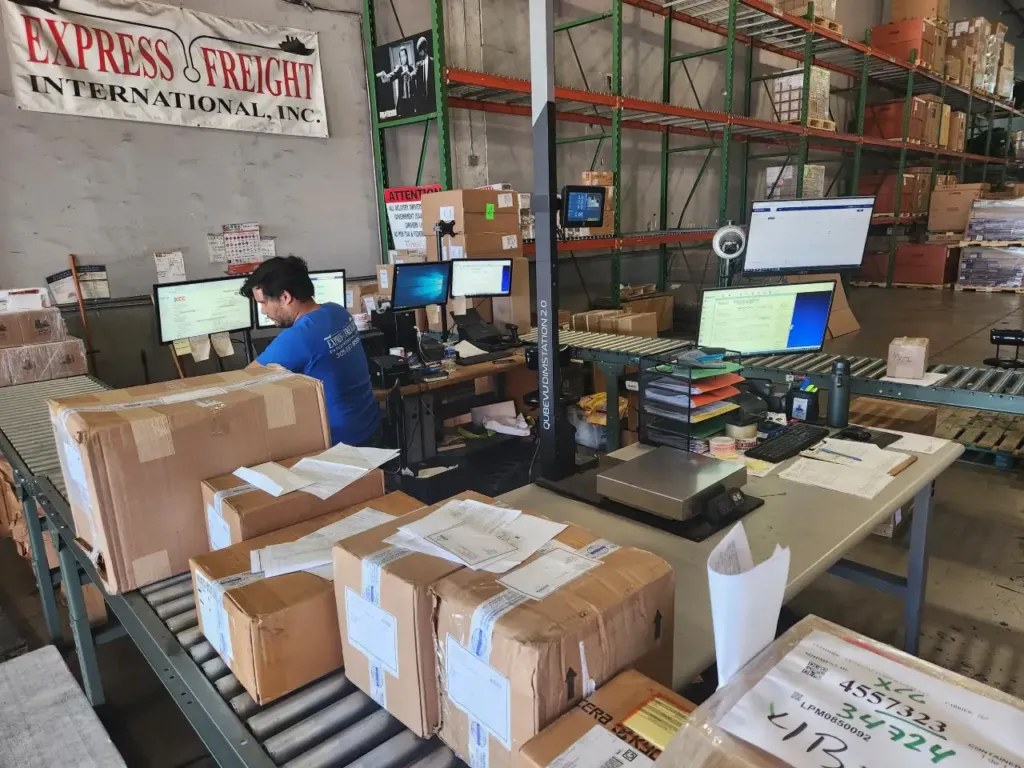
We are a bonded container freight station. That means freight can come off the port and into our building before the entry is resolved, instead of accruing terminal charges while everyone waits on a document. Under bond, a container can be received, opened and deconsolidated at our dock before entry is filed, and split to four different consignees while it is there.
We are also a C-TPAT certified participant in CBP’s supply chain security program, and we move in-bond cargo on bonded trucks with bonded drivers. If your compliance program requires your service providers to be C-TPAT participants, we meet it.
What we are not is a Foreign Trade Zone. If your program needs FTZ treatment, this is the wrong building. Better to find that out before the container is on the water. See cross-docking for how freight moves across the dock, warehousing if it needs to sit, and trucking for the delivery after release.
What we handle at the Port of Miami and MIA, and what we will not pretend to do.
✓ We handle
- Ocean and air imports into Miami
- Clearance at any US port of entry, with pickup and delivery there by a third party
- Export documentation and EEI filing through AES, as your authorized agent
- In-bond movements on bonded trucks and drivers
- CAFTA-DR and USMCA preference claims
- FDA, USDA and EPA regulated commodities
- Dangerous goods entries, with the declaration built in-house
- Deconsolidation under bond before entry is filed
- Delivery after release, on our own South Florida fleet
✕ We do not
- File entries ourselves; a licensed broker does that
- Operate a Foreign Trade Zone
- Give binding tariff classification opinions; those come from CBP
- Handle personal effects or household goods
- Take refrigerated cargo into our warehouse
- Promise you will not be examined
If certainty on a classification matters, on a high-volume program or a duty rate worth arguing about, the answer is a binding ruling from CBP and not an opinion from a forwarder. We will help you put the request together and point you at the rulings already published on the same commodity.
From the first entry to the last free day.
What documents do you need to clear my import?
A signed customs power of attorney, an active customs bond, the commercial invoice showing values and country of origin, the packing list, and the bill of lading or airway bill. Add the certificate or certification of origin if you are claiming a free trade agreement, and any partner agency paperwork the commodity needs: FDA prior notice for food, an EPA form for engines and vehicles, a USDA permit for plant material. Send what you have and we will tell you what is missing before it matters.
Who is the importer of record, and what am I actually responsible for?
The importer of record is the owner or purchaser of the goods, or a licensed broker they designate. That is you, in most cases, and it is not a formality. The importer of record owes reasonable care on classification and valuation, owes the duties, taxes and fees, and has to keep the records for five years. A broker files on your behalf; the legal responsibility stays with you. We would rather you know that at the start than read it in a CBP letter.
Do I need a continuous bond or a single entry bond?
A single transaction bond covers one entry and is priced against that shipment’s value and duty. A continuous bond covers every entry you file, at every port, for a year. The continuous bond is set at ten percent of the duties, taxes and fees you paid the previous calendar year, in multiples of $10,000, with a $50,000 minimum. Rule of thumb: if you are importing more than a handful of times a year, the continuous bond stops being the expensive option. If your volume jumps, tell us, because an undersized bond gets entries rejected and nobody warns you first.
What is the ISF, and why does it cost $5,000?
The Importer Security Filing, or “ten plus two”, is ten pieces of data CBP wants before your container is loaded onto the ship overseas, so it can be risk-assessed while it is still on the other side of the ocean. It is due no later than 24 hours before lading at the foreign port. Late, inaccurate or missing filings draw liquidated damages of $5,000 per violation, and CBP can hold the container on arrival as well. It applies to ocean imports only. It is the single cheapest problem to avoid and one of the most expensive to have.
How long does customs clearance actually take?
When the file is complete and nothing is flagged, release can come the same day the entry is accepted. Realistically, what decides the answer is not us and not CBP. It is whether the documents were right when they arrived, whether a partner agency has an interest, and whether the container gets selected for an exam. A non-intrusive x-ray is usually short. An intensive exam at a centralized examination station is measured in days, not hours. We will give you the honest read on your shipment rather than a number that sounds good on a website.
What is the difference between demurrage and detention?
Demurrage is charged by the marine terminal when your container sits on their property past free time. Detention is charged by the ocean carrier for keeping their container or chassis out past the allowance, usually after it has left the terminal. Different companies, different clocks, frequently on the same shipment. Since the FMC’s 2024 billing rule, those invoices have to reach the billed party within 30 calendar days of when the charges stopped accruing, and may only be billed to the party that contracted the transport or the consignee taking delivery.
Is there still an $800 de minimis exemption?
No, not for commercial freight. Duty-free de minimis treatment under section 321 was suspended in 2025, and CBP published an interim final rule in June 2026 suspending it indefinitely for merchandise arriving through every mode other than the international postal network. Shipments that used to ride in under $800 duty-free now need a formal or informal entry like anything else. This is an area that has moved repeatedly. The position stated here is current as of September 18, 2026, and we will tell you where it stands when you call.
Can you clear cargo at ports other than Miami?
Yes. An entry can be filed at any US port of entry, and we manage clearance at any of them, with the entry filed by the licensed customs broker we work with. What changes outside Miami is the freight, not the file: pickup and delivery at another port is handled by a third party rather than our own trucks, and the cargo does not come into our own bonded CFS. In Miami the building, the dock, the bonded deconsolidation and the fleet are all ours, which is why we can do more here after release. Tell us the port at booking and we will tell you plainly which parts we do ourselves and which parts we are subcontracting.
Can I claim CAFTA-DR duty-free treatment on goods from Central America?
If the goods qualify, yes. CAFTA-DR does not require a government form. A certification containing the required data elements is enough, and the producer, exporter or importer can make it. What matters is that the goods actually meet the rule of origin for their classification and that you keep the supporting records, because CBP can verify the claim after the fact and assess duties and penalties if it does not hold up. Tell us at booking, not after entry; retroactive claims are possible but they are work.
Do you clear dangerous goods, or FDA and USDA regulated cargo?
Yes to all three. Our staff are dangerous goods trained and certified and we build the declaration in-house rather than sending you elsewhere for it. See dangerous goods consulting, or the free hazmat segregation checker if you just need to know whether two classes ship in one box. FDA and USDA regulated commodities come with their own data and their own deadlines, and we handle that alongside the entry rather than treating it as your problem.
Where this page leads next.
Send us the next one before it sails.
Commercial invoice, packing list, and the booking. We will tell you what is missing, what the deadlines are, and what it is going to take, before the container is somebody’s problem.
Miami, FL 33166
(Medley)
8:30 AM – 5:00 PM ET
Read this before you rely on it
This page describes how the US import process works in general terms and how we work within it. It is not legal advice, not customs advice, and not a determination of classification, valuation or admissibility for any particular shipment. Only a licensed customs broker can transact customs business on your behalf, and the importer of record remains legally responsible for the entry. Regulations change; the citations here were checked against the eCFR on September 18, 2026. Confirm anything that matters against the current regulation and your own broker or counsel before you act on it.
Sources
- 19 CFR 149.2: Importer Security Filing, due no later than 24 hours before cargo is laden aboard the vessel at the foreign port.
- 19 CFR 141.46: customs power of attorney required before a broker acts; retained in the broker’s files, not filed with CBP.
- 19 CFR part 111: only a licensed customs broker may transact customs business for another person.
- 19 CFR 142.12(b): entry summary documentation with estimated duties within 10 working days after the time of entry.
- 19 CFR 159.11(a): entries deemed liquidated one year from the date of entry absent extension or suspension.
- 19 CFR 174.12(e): protest filed within 180 days of the decision, for entries made on or after December 18, 2004.
- CBP Directive 3510-004: continuous importer bond at 10% of prior calendar year duties, taxes and fees, $50,000 minimum, in multiples of $10,000.
- Federal Maritime Commission final rule on demurrage and detention billing requirements, effective May 28, 2024: 30-day billing window and permitted billed parties.
- Federal Register, June 24, 2026: indefinite suspension of the de minimis exemption for merchandise arriving through all modes other than the international postal network.
- 19 CFR 10.584: data elements for a CAFTA-DR certification of origin.